
Wildlife Safety in Thailand: Animals to Be Aware Of (2026 Guide)
Wildlife Safety in Thailand: Animals to Be Aware Of (2026 Guide)
Thailand is home to some of the most fascinating wildlife in Southeast Asia.
From tropical rainforests and national parks to coral reefs, mangrove forests, and even urban areas, travelers may encounter animals they rarely see back home.
The good news is that serious wildlife encounters are uncommon for most visitors. Most wild animals would rather avoid people than interact with them.
Still, knowing what to watch for and how to react can make hiking, swimming, camping, and exploring Thailand much safer.
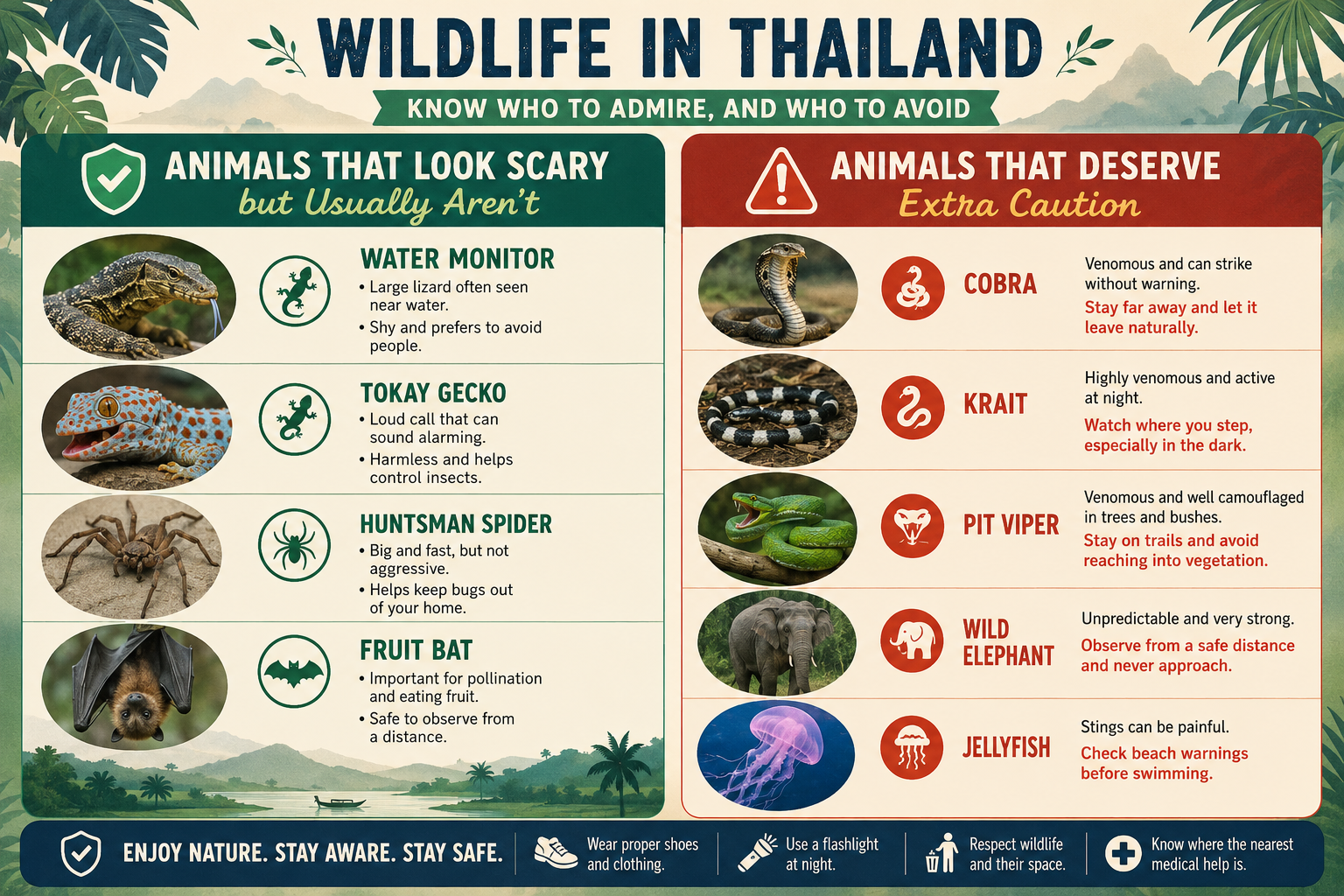
1. Snakes
Thailand is home to many species of snakes, including both harmless and venomous species.
Most travelers will never have a close encounter with one. Snakes generally prefer to avoid people and will often move away when given enough space.
If you see a snake:
- Stay calm.
- Keep a safe distance.
- Never attempt to touch, catch, or kill it.
- Give it a clear route to escape.
- Inform park staff if it's near a busy trail or visitor area.
When hiking, stay on marked paths, watch where you step, and avoid reaching into dense vegetation or places you cannot clearly see.
2. Monkeys
Monkeys are commonly seen around temples, beaches, viewpoints, islands, and national parks.
They may look friendly, but they're still wild animals.
Avoid:
- Feeding them.
- Touching them.
- Leaving food visible.
- Carrying food openly around groups of monkeys.
- Trying to take close-up selfies with them.
Some monkeys have become very comfortable around tourists and may grab bags, drinks, sunglasses, or phones.
Enjoy them from a distance and let them come and go naturally.
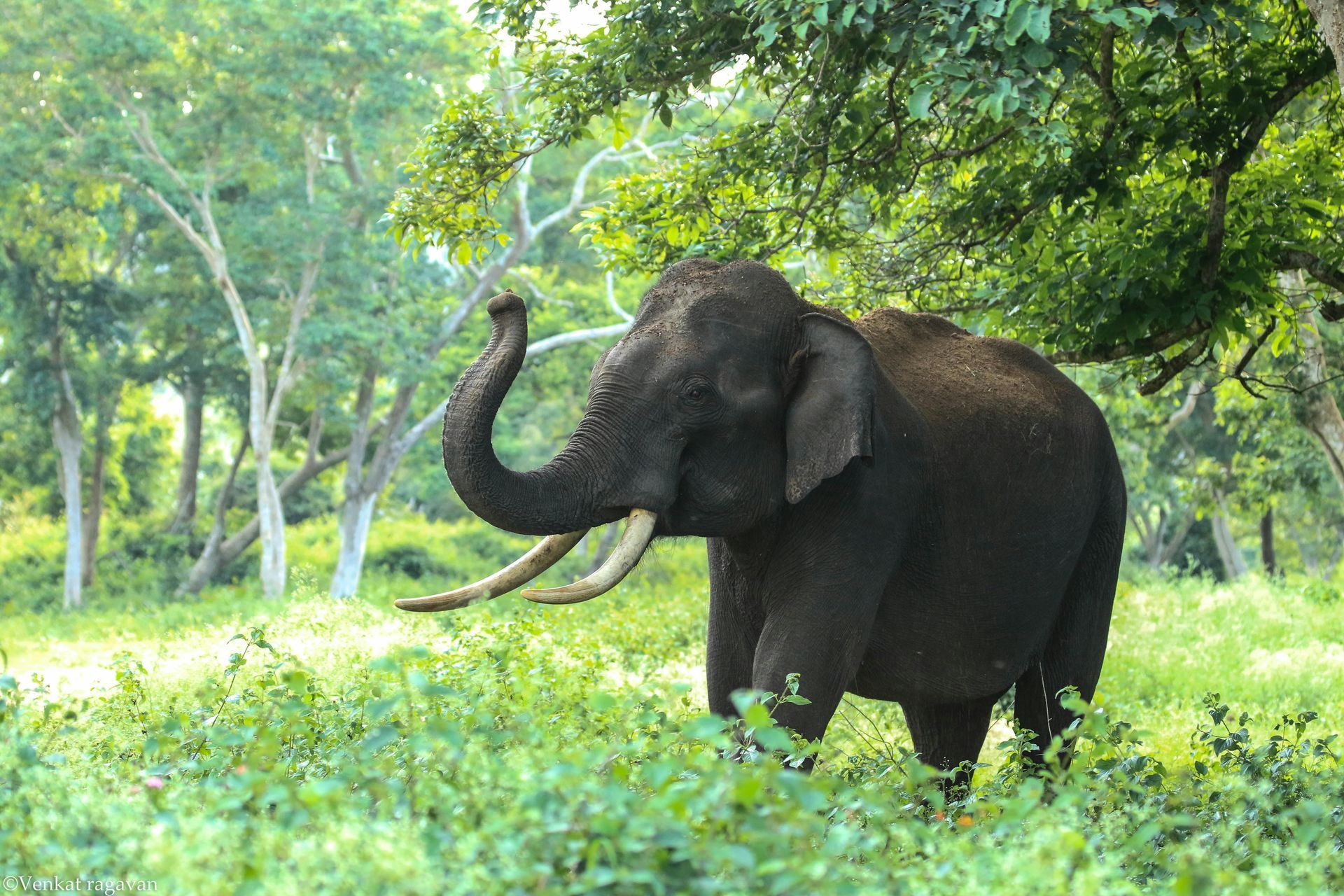
3. Wild Elephants
Seeing a wild elephant can be one of the most incredible wildlife experiences in Thailand.
But wild elephants are extremely powerful and unpredictable.
If you encounter one:
- Keep a significant distance.
- Never approach for a photograph.
- Don't block its path.
- Remain quiet and avoid sudden movements.
- Follow instructions from park rangers.
- If you're in a vehicle, follow local ranger guidance rather than approaching or leaving the vehicle for a better view.
A telephoto lens makes a much better elephant souvenir than an accidental close encounter. 🐘
4. Water Monitors
Asian water monitors can look intimidating because of their impressive size.
They're commonly found near:
- Canals
- Lakes
- Rivers
- Mangroves
- Parks
They generally prefer to avoid people when left alone.
Don't feed, corner, or attempt to touch one.
Simply give it space and enjoy watching one of Thailand's most impressive reptiles from a distance.
5. Jellyfish
Jellyfish may occasionally appear around Thailand's coastline, and conditions vary by location and season.
While many encounters are minor, some species can cause dangerous stings, so beach warnings should always be taken seriously.
Before swimming:
- Check warning signs.
- Follow lifeguard instructions.
- Ask locally about current conditions if you're unsure.
- Never touch a jellyfish, including one washed onto the beach.
If warning signs advise against entering the water, don't ignore them just because other people are swimming.
6. Mosquitoes
The animal you're most likely to encounter isn't a cobra, elephant, or giant lizard.
It's the mosquito.
Mosquitoes can transmit illnesses including dengue, so preventing bites is sensible, particularly in areas with active mosquito populations.
Protect yourself by:
- Using insect repellent.
- Wearing lightweight long clothing when appropriate.
- Using screens or mosquito nets where necessary.
- Reducing exposure around dawn and dusk when mosquitoes may be particularly active.
7. Scorpions and Centipedes
Scorpions and large centipedes occasionally appear in Thailand, particularly around vegetation and places where they can hide.
If you're hiking or camping:
- Shake out shoes before putting them on.
- Use a flashlight after dark.
- Don't reach underneath rocks or logs.
- Check bedding and equipment when camping.
Again, encounters aren't something the average traveler needs to spend their holiday worrying about.
Basic awareness goes a long way.
8. Marine Life
Thailand's warm seas are filled with beautiful marine life.
But coral reefs should be observed rather than handled.
When snorkeling or diving:
- Never touch coral.
- Avoid touching sea urchins or unfamiliar marine animals.
- Give sea turtles plenty of space.
- Never chase dolphins or other wildlife.
- Don't collect shells or coral where prohibited.
- Follow instructions from your dive or tour operator.
The golden rule underwater is simple:
Look, photograph, enjoy, but leave everything where you found it.
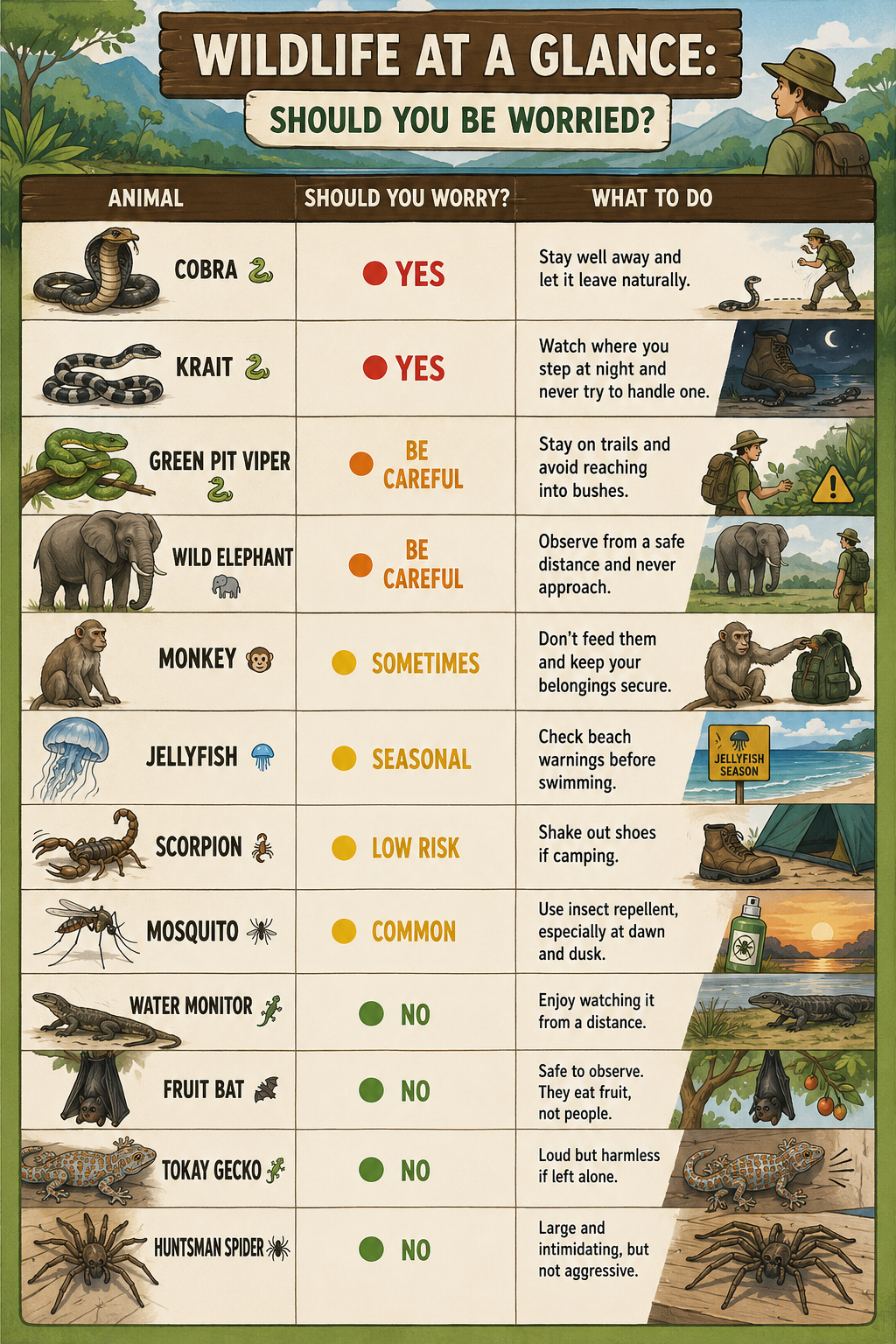
Staying Safe While Hiking in Thailand
Wildlife isn't the only thing to consider when exploring Thailand's forests.
Weather, heat, slippery trails, and rapidly changing conditions can sometimes pose greater risks.
Before hiking:
- Stay on marked trails.
- Wear suitable footwear.
- Carry enough drinking water.
- Bring insect repellent.
- Check the weather.
- Avoid unfamiliar remote trails alone.
- Tell someone where you're going.
- Follow national park warnings and closures.
Heavy tropical rain can cause slippery conditions and flash flooding, particularly during the rainy season.
What Should You Do If You Encounter Wildlife?
The basic rules work for almost everything:
- Stay calm.
- Keep your distance.
- Don't feed wildlife.
- Don't touch or capture animals.
- Don't block their escape route.
- Follow warning signs.
- Listen to park rangers and local authorities.
Remember:
You're visiting their habitat.
Give wildlife enough space to remain wild.
Should You Be Worried About Wildlife in Thailand?
For the average traveler, wildlife shouldn't be something that stops you from exploring Thailand.
The better approach is awareness rather than fear.
Follow local advice, stay on designated trails, respect warning signs, and don't approach wild animals for photographs.
With sensible precautions, wildlife can become one of the most memorable parts of exploring Thailand rather than something to fear.
Enjoy Thailand's Wild Side Responsibly
Thailand's wildlife is one of the country's greatest natural treasures.
You might see hornbills flying above the rainforest, monkeys around a temple, enormous water monitors beside a canal, tropical fish beneath the sea, or even wild elephants inside a national park.
Those encounters are part of what makes exploring Thailand extraordinary.
Keep your distance, respect their habitat, and leave nature exactly as you found it.
Ready to Explore Thailand's Wild Side?
From national parks and jungle adventures to snorkeling, marine parks, and island experiences, discover unforgettable ways to experience Thailand's incredible natural world.
Make sure you are prepared
Discover Everything Koh Samui Has to Offer
Koh Samui is far more than just beautiful beaches, it’s a complete island experience. From world-class restaurants and local street food to exciting tours, vibrant nightlife, peaceful retreats, and unique cultural attractions, Samui has something for every traveler.
Whether you’re here to relax, explore, invest, or even relocate, you’ll find trusted businesses, hand-picked experiences, and insider tips right here on My Visit Thailand.

Restaurants in Samui
Find the best restaurants in Koh Samui

Nightlife in Koh Samui
Discover Koh Samui's vibrant nightlife
Tours in Koh Samui
Discover the best tours in Koh Samui

Car/Motorbike rentals
Find car and motorbike rentals in Koh Samui