The Ultimate Guide to Thai Markets (2026 Guide)
The Ultimate Guide to Thai Markets (2026 Guide)
Thailand's markets aren't simply places to shop.
They're where breakfast is cooked before sunrise, tropical fruit arrives by the truckload, families buy ingredients for dinner, street-food vendors fire up their grills, and entire neighborhoods gather after dark.
For travelers, markets offer one of the easiest ways to experience everyday Thai life without needing an itinerary.
And they're incredibly diverse.
You can explore a floating market by boat in the morning, wander through an enormous weekend market in the afternoon, and finish the day eating your way through a neon-lit night market.
Here's your guide to the different types of markets in Thailand and how to experience them in 2026.
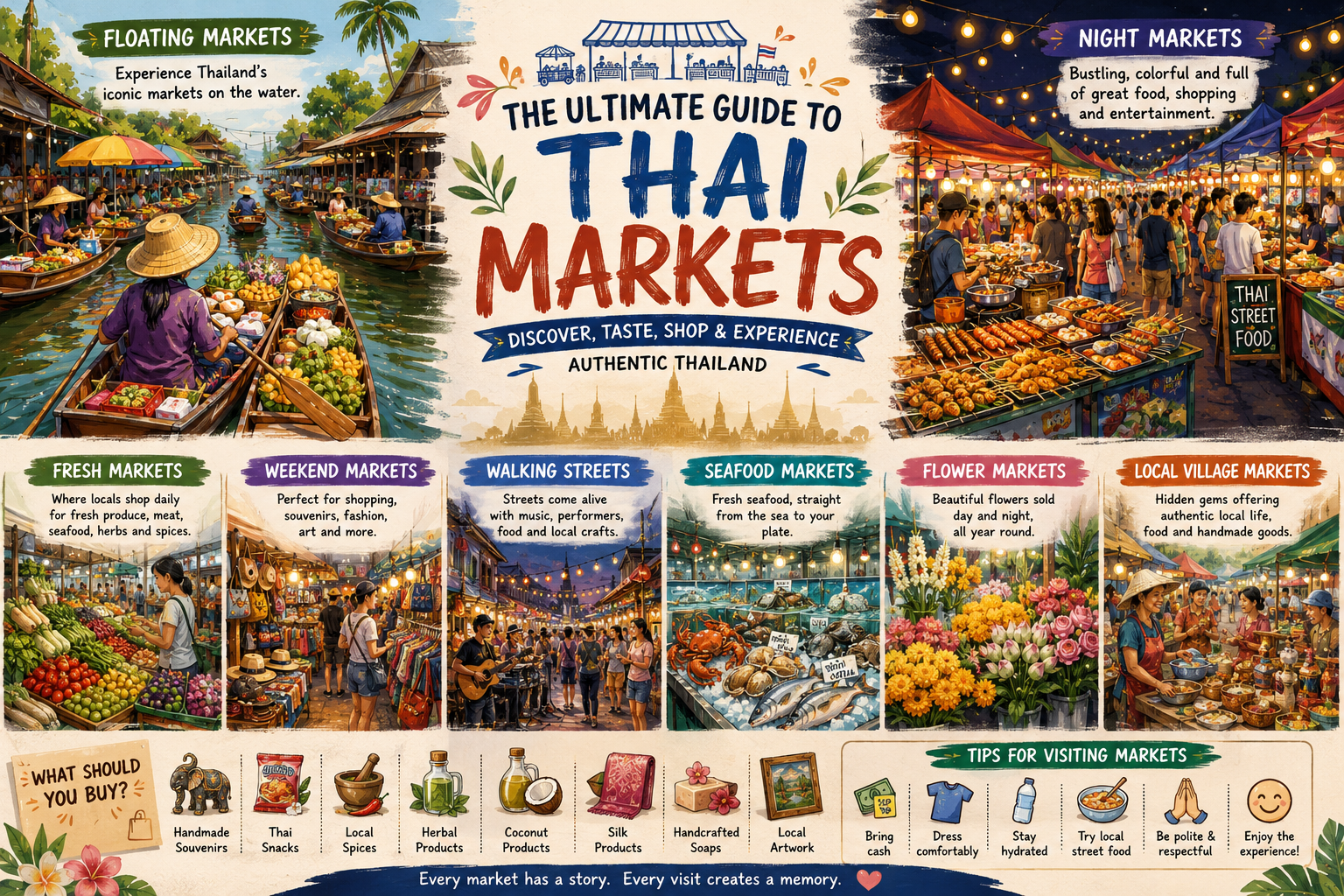
1. Night Markets
If you visit only one type of Thai market, make it a night market.
As temperatures cool after sunset, streets and open spaces transform into enormous outdoor dining and shopping areas.
Expect to find:
- Street food
- Seafood
- Desserts
- Fruit shakes
- Clothing
- Handmade products
- Souvenirs
- Live music
- Small bars and cafés
Popular night markets and walking streets can be found throughout Thailand, including Bangkok, Chiang Mai, Phuket, Krabi and Koh Samui.
Some are heavily visited by tourists.
Others are where locals simply go for dinner.
Either way, arrive hungry.
Love Thailand After Dark? → Best Night Markets in Thailand (2026 Guide)
2. Floating Markets
Few images are more closely associated with Thailand than wooden boats filled with tropical fruit and freshly prepared food.
Floating markets developed around Thailand's historic network of canals and waterways, particularly in central Thailand.
Today, experiences vary considerably.
Some markets are major tourist attractions, while others remain popular weekend destinations for Thai visitors.
Well-known examples include:
- Damnoen Saduak
- Amphawa
- Taling Chan
- Khlong Lat Mayom
You'll find fruit, snacks, seafood, desserts and dishes prepared directly beside the water.
Best for: Culture, photography and food
Best time: Generally morning, although this varies by market
Always check the individual market's operating days and hours before traveling.
3. Fresh Markets
Want to see what everyday food culture actually looks like?
Go to a fresh market.
These are working markets where restaurants, families and local residents shop for ingredients.
Expect rows filled with:
- Tropical fruit
- Vegetables
- Fresh herbs
- Meat
- Seafood
- Eggs
- Spices
- Curry pastes
- Prepared meals
- Flowers
Many are busiest early in the morning.
You may not buy much, but walking through one can teach you more about Thai ingredients than staring at twenty restaurant menus.
This is the perfect place for:
Discover Thailand's Tropical Flavors → Thai Fruits You Must Try (2026 Guide)
4. Weekend Markets
Weekend markets turn shopping into an expedition.
The giant of the category is Chatuchak Weekend Market in Bangkok, famous for its enormous collection of vendors.
Depending on the market, you may find:
- Clothing
- Accessories
- Vintage items
- Art
- Handmade crafts
- Home décor
- Plants
- Food
- Souvenirs
They're ideal if you want shopping and food in the same place.
Just don't tell yourself:
"I'll only stay for an hour."
The market has heard that one before.
5. Walking Streets
Walking streets are somewhere between a market and a community event.
Roads are temporarily closed to traffic and replaced by rows of vendors, performers and food stalls.
They're particularly popular on weekends.
You'll often find:
- Handmade products
- Local artists
- Traditional snacks
- Street performers
- Clothing
- Live music
- Regional food
Chiang Mai is particularly famous for its walking streets, while destinations such as Koh Samui also have popular market nights.
Best for: A relaxed evening of eating, browsing and people-watching
6. Seafood Markets
Along Thailand's coastline, markets take advantage of something extremely important:
The sea is right there.
Seafood markets can contain an enormous variety of fresh fish, prawns, squid, shellfish, crabs and other local catches.
At some markets, you can select your seafood and have it prepared nearby.
Coastal destinations including Phuket, Koh Samui and Hua Hin offer plenty of opportunities to experience Thailand's seafood culture.
Best for: Seafood lovers
Tip: Earlier visits may offer a wider selection at working fresh markets.
7. Flower Markets
Thai markets aren't only about food.
Bangkok's famous Pak Khlong Talat is one of the country's best-known flower markets.
You'll encounter enormous quantities of:
- Orchids
- Roses
- Jasmine
- Marigolds
- Lotus flowers
- Floral garlands
Flowers play an important role in Thai religious ceremonies, offerings, celebrations and everyday life.
This makes a flower market more than simply a beautiful place for photographs.
It's also a glimpse into Thai traditions.
8. Local Village Markets
These may be the markets you remember most.
Small local markets rarely appear on lists of Thailand's “Top 10 Attractions,” because they aren't necessarily designed as attractions at all.
They're simply part of everyday life.
Depending on the region and season, you might find:
- Home-cooked food
- Seasonal fruit
- Local vegetables
- Regional snacks
- Clothing
- Household products
- Handmade goods
They may not have neon signs or Instagram-famous food.
That's exactly why they're interesting.
What Should You Eat at a Thai Market?
Potentially a dangerous question for your remaining stomach capacity.
Depending on the region, look for:
- Moo Ping
- Som Tam
- Grilled chicken
- Noodle soups
- Pad Kra Pao
- Sai Krok Isan
- Grilled seafood
- Fresh tropical fruit
- Thai desserts
- Coconut ice cream
- Thai iced tea
- Fresh fruit shakes
One strategy works particularly well:
Look for busy stalls with lots of local customers.
A queue can sometimes be the most useful menu translation available.
Hungry? → 10 Thai Street Foods Locals Actually Eat
What Should You Buy at Thai Markets?
Markets can also be excellent places for souvenirs and locally made products.
Look for:
- Handmade crafts
- Thai snacks
- Spices
- Textiles
- Coconut products
- Artwork
- Ceramics
- Herbal products
- Local specialty foods
Try to choose products that are genuinely connected to the area you're visiting rather than buying the same mass-produced souvenir available everywhere.
Can You Bargain at Thai Markets?
Sometimes.
But not everywhere.
Bargaining is more common with clothing, souvenirs and certain general merchandise where prices aren't fixed.
Don't assume you should bargain over inexpensive food or clearly marked fixed prices.
If negotiating is appropriate, keep it friendly.
Smile, make a reasonable offer, and remember that winning a five-minute negotiation over 20 baht probably isn't going to transform your retirement portfolio.
Cash or QR Payment?
Thailand has become extremely QR-friendly, and you'll see QR payment signs at even tiny stalls.
However, Thailand's domestic QR payment systems aren't necessarily accessible to every international traveler or foreign banking app.
For visitors, carrying some Thai baht is still a very good idea, particularly at smaller markets.
Small denominations are useful.
Best Time to Visit Thai Markets
It depends entirely on the market.
🌅 Fresh markets: Early morning
☀️ Floating markets: Often morning or daytime
🌇 Walking streets: Late afternoon into evening
🌙 Night markets: After sunset
🛍️ Weekend markets: Check the specific operating day and hours
Thailand's heat is another reason evening markets are so popular.
Once the sun disappears, browsing suddenly becomes considerably more civilized.
Tips for Visiting Markets in Thailand
A few simple things make the experience easier:
- Bring cash in smaller denominations.
- Wear comfortable shoes.
- Carry water.
- Ask before photographing individual vendors closely.
- Keep valuables secure in crowded areas.
- Try unfamiliar food, but choose stalls that appear clean and busy.
- Check opening days before traveling specifically for a market.
- Don't expect every market to operate every day.
And most importantly:
Don't rush.
Markets are best experienced by wandering.
Why Thai Markets Are Worth Exploring
Thai markets bring together almost everything that makes traveling around Thailand interesting.
Food.
People.
Traditions.
Local ingredients.
Shopping.
Noise.
Color.
And occasionally something being grilled on a stick that requires further investigation.
Some markets are enormous tourist attractions.
Others consist of a few dozen vendors serving one neighborhood.
Both can be worth visiting.
Because exploring a Thai market isn't really about what you buy.
It's about seeing Thailand while everyday life is happening around you.
Taste & Experience Thai Culture
From local markets and traditional food to cultural experiences across Thailand, discover more of the country beyond its famous attractions.
Make sure you are prepared
Discover Everything Koh Samui Has to Offer
Koh Samui is far more than just beautiful beaches, it’s a complete island experience. From world-class restaurants and local street food to exciting tours, vibrant nightlife, peaceful retreats, and unique cultural attractions, Samui has something for every traveler.
Whether you’re here to relax, explore, invest, or even relocate, you’ll find trusted businesses, hand-picked experiences, and insider tips right here on My Visit Thailand.
Restaurants in Samui
Find the best restaurants in Koh Samui
Nightlife in Koh Samui
Discover Koh Samui's vibrant nightlife

Tours in Koh Samui
Discover the best tours in Koh Samui
Car/Motorbike rentals
Find car and motorbike rentals in Koh Samui