Thai Wedding Culture: Love, Family, and Tradition
Thai Wedding Traditions Explained: Love, Family and Culture in Thailand
A Thai wedding can look very different from a wedding in Europe, America, or elsewhere in the world.
There may be Buddhist monks chanting early in the morning, a lively procession carrying gifts to the bride's family, symbolic gates blocking the groom's path, elders pouring blessed water over the couple's hands, and several outfit changes before the day is over.
But behind all these traditions is something much bigger.
In Thailand, marriage has traditionally been connected not only to the couple, but also to family, respect, community, religion, and the joining of two families.
Modern Thai weddings vary enormously. Some couples follow elaborate traditional ceremonies, while others choose a modern celebration with only a few cultural elements.
Understanding some of these traditions offers a fascinating glimpse into Thai culture beyond temples, beaches, and tourist attractions.
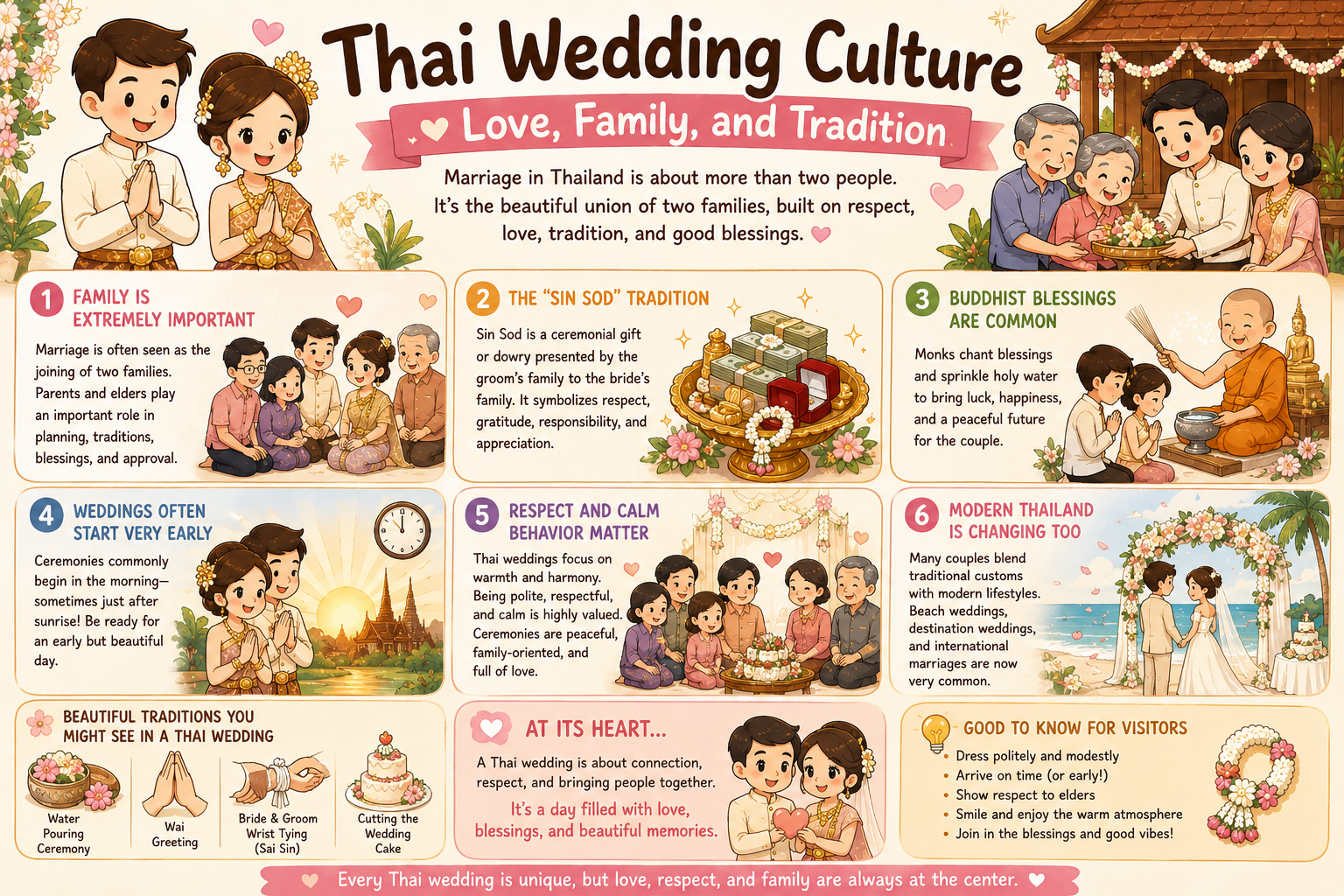
1. Marriage Traditionally Brings Two Families Together
Family plays an important role in many aspects of Thai society, and weddings are no exception.
Traditionally, marriage can be viewed as the joining of two families, rather than simply a commitment between two individuals.
Parents and older relatives may participate in:
- Wedding planning
- Ceremonies
- Blessings
- Family discussions
- Traditional rituals
Exactly how involved families are depends entirely on the couple.
Modern couples may make most decisions themselves, while other families maintain stronger traditional involvement.
But throughout many Thai weddings, one theme appears repeatedly:
Respect for parents and elders.
You'll often see older family members given important roles during ceremonies and invited to formally bless the couple.
2. What Is Sin Sod?
One Thai wedding tradition that often attracts curiosity from foreigners is Sin Sod (สินสอด).
Sin Sod is traditionally a gift presented by the groom's side to the bride's family as part of marriage arrangements or the wedding ceremony.
It may include:
- Money
- Gold
- Jewelry
- Other valuables
Traditionally, Sin Sod can represent the groom's ability to provide for the marriage while also demonstrating respect toward the bride and her family.
But there's an important point:
There isn't one universal Sin Sod amount or rule that applies to every Thai wedding.
Practices vary considerably depending on families, regions, financial circumstances, and personal preferences.
Some families maintain the tradition strongly.
Others treat it primarily as a ceremonial display.
Some modern couples may modify it significantly or not follow it at all.
So if you see enormous claims online about how much a foreigner “must pay” to marry someone from Thailand, approach them cautiously.
Thai families aren't a wedding-price calculator.
3. The Khan Maak Procession
One of the most colorful parts of a traditional Thai wedding can be the Khan Maak procession.
The groom, accompanied by family and friends, ceremonially travels toward the bride's family carrying traditional gifts.
Depending on the wedding, the procession may include music, dancing, decorated trays, flowers, food, sweets, money, and other symbolic items.
It can be considerably livelier than the peaceful ceremonies that follow.
And there's usually another obstacle waiting for the groom...
4. The Groom May Have to Pass Through “Gates”
Before reaching the bride, the groom may encounter symbolic gates created by the bride's relatives or friends.
These are traditionally known as ประตูเงินประตูทอง, often translated as the Silver and Gold Gates.
People hold chains, ribbons, or decorative arrangements across the groom's path.
Getting through may require him to:
- Answer questions
- Complete playful challenges
- Demonstrate his affection
- Give small envelopes or gifts
The atmosphere is generally playful rather than adversarial.
Essentially, the bride's team has installed wedding DLC and the groom has to unlock the next level.
5. Buddhist Blessings May Be Part of the Wedding
Buddhism can play an important role in Thai wedding celebrations, although a Buddhist ceremony isn't required for every Thai marriage.
When included, monks may be invited to chant and offer blessings.
The couple and their families may also make merit by offering food or other necessities to monks.
These ceremonies often happen in the morning and tend to feel peaceful and intimate.
Importantly, Buddhist wedding blessings and legal marriage registration are separate things.
A religious or traditional ceremony does not by itself necessarily constitute the legal registration of the marriage.
Curious About Buddhism in Everyday Thai Life?
From temples and monks to merit-making and everyday traditions, learn the basics before exploring Thailand.
6. The Rod Nam Sang Water-Pouring Ceremony
One of the most recognizable Thai wedding traditions is the Rod Nam Sang ceremony.
The bride and groom sit together, often wearing connected floral head garlands or ceremonial threads.
Guests, beginning with respected elders and family members, take turns pouring blessed water gently over the couple's hands while offering wishes for their future.
The ceremony symbolizes blessings, happiness, and prosperity for the marriage.
For foreign guests attending a traditional Thai wedding for the first time, this is often one of the most memorable parts of the day.
It's quiet, personal, and heavily centered around family.
7. Why Thai Weddings Can Start So Early
If you're invited to a Thai wedding and someone tells you to arrive early...
they may genuinely mean early.
Traditional ceremonies frequently take place during the morning, and some wedding schedules begin shortly after sunrise.
The timing may be influenced by family preferences, religious ceremonies, practical considerations, or an auspicious time selected for the couple.
This means a single Thai wedding can involve:
Morning: Traditional and Buddhist ceremonies
Daytime: Family ceremonies, photography and meals
Evening: Reception, speeches, dinner and celebration
For particularly elaborate weddings, it can become a very long day.
Your alarm clock has officially been invited too.
8. Auspicious Dates and Times Can Matter
Some Thai families consult monks, astrologers, elders, or traditional calendars when choosing a wedding date or ceremonial time.
Certain dates and times may be considered more auspicious for the couple.
This reflects a broader characteristic of Thai culture where Buddhism, astrology, traditional beliefs, and local customs can sometimes overlap.
Not every modern couple follows these practices.
But when someone tells you the wedding ceremony begins at a suspiciously precise hour in the morning, there may be more behind that time than venue availability.
Discover More Traditional Thai Beliefs
From spirit houses to beliefs about luck and everyday traditions, explore ancient ideas that still appear in modern Thailand.
9. What Should You Wear to a Thai Wedding?
If you're attending a Thai wedding as a foreign guest, don't panic.
The invitation, couple, or family should always be your first source of information because weddings range from traditional ceremonies to modern hotel receptions and beachfront celebrations.
As a general rule:
Dress neatly and respectfully.
Avoid extremely casual beachwear unless the couple specifically says otherwise.
If part of the ceremony takes place at a temple or involves monks, more conservative clothing may be appropriate.
And if you're unsure?
Ask the couple.
That's considerably safer than attempting to decode Thai wedding etiquette from twelve conflicting internet forums at midnight.
10. Thai Weddings Can Have Several Outfit Changes
Don't be surprised if the bride and groom look completely different several hours after you first saw them.
Some couples wear traditional Thai clothing during morning ceremonies before changing into Western-style wedding attire for the reception.
Others may have several outfits throughout the day.
Modern Thai weddings can beautifully combine:
- Traditional Thai clothing
- Buddhist ceremonies
- Thai family traditions
- Western wedding customs
- Modern receptions
- International influences
Instead of replacing tradition, many couples simply remix it.
11. Modern Thai Weddings Can Look Completely Different
There isn't one template for a “Thai wedding.”
A wedding in rural northern Thailand might look very different from a luxury hotel wedding in Bangkok.
An international Thai-foreign couple may combine traditions from both families.
A couple in Koh Samui or Phuket might choose a beachfront ceremony.
Some couples want almost every traditional element.
Others prefer a simple legal registration followed by dinner.
And many fall somewhere in between.
Modern Thailand isn't abandoning tradition.
People are choosing which traditions still feel meaningful to them.
If You're Invited to a Thai Wedding
For a foreign guest, attending a Thai wedding can be an incredible cultural experience.
You don't need to understand every ceremony beforehand.
A few simple principles go a long way:
- Dress appropriately
- Arrive at the requested time
- Follow the family's lead
- Behave respectfully during Buddhist ceremonies
- Don't interrupt important rituals for photographs
- Show respect toward parents and elders
- Ask if you're unsure what to do
Nobody expects a foreign guest to suddenly become an expert in Thai ceremonial etiquette.
Being attentive and respectful matters considerably more.
More Than a Wedding Ceremony
Thai wedding traditions reveal many of the values that appear throughout Thai society.
Family.
Respect.
Generosity.
Community.
Tradition.
And increasingly, the freedom to combine those traditions with modern life.
Every Thai wedding is different.
Some are enormous celebrations.
Others are intimate family ceremonies.
Some follow traditions closely, while others borrow only a few symbolic elements.
But look beyond the decorations, clothing, and photographs and you'll often find the same idea underneath:
A Thai wedding isn't only about two people choosing each other.
It's also about families coming together, receiving the blessings of the people who matter to them, and beginning a new chapter surrounded by community. 🇹🇭
Make sure you are prepared
Discover Everything Koh Samui Has to Offer
Koh Samui is far more than just beautiful beaches, it’s a complete island experience. From world-class restaurants and local street food to exciting tours, vibrant nightlife, peaceful retreats, and unique cultural attractions, Samui has something for every traveler.
Whether you’re here to relax, explore, invest, or even relocate, you’ll find trusted businesses, hand-picked experiences, and insider tips right here on My Visit Thailand.
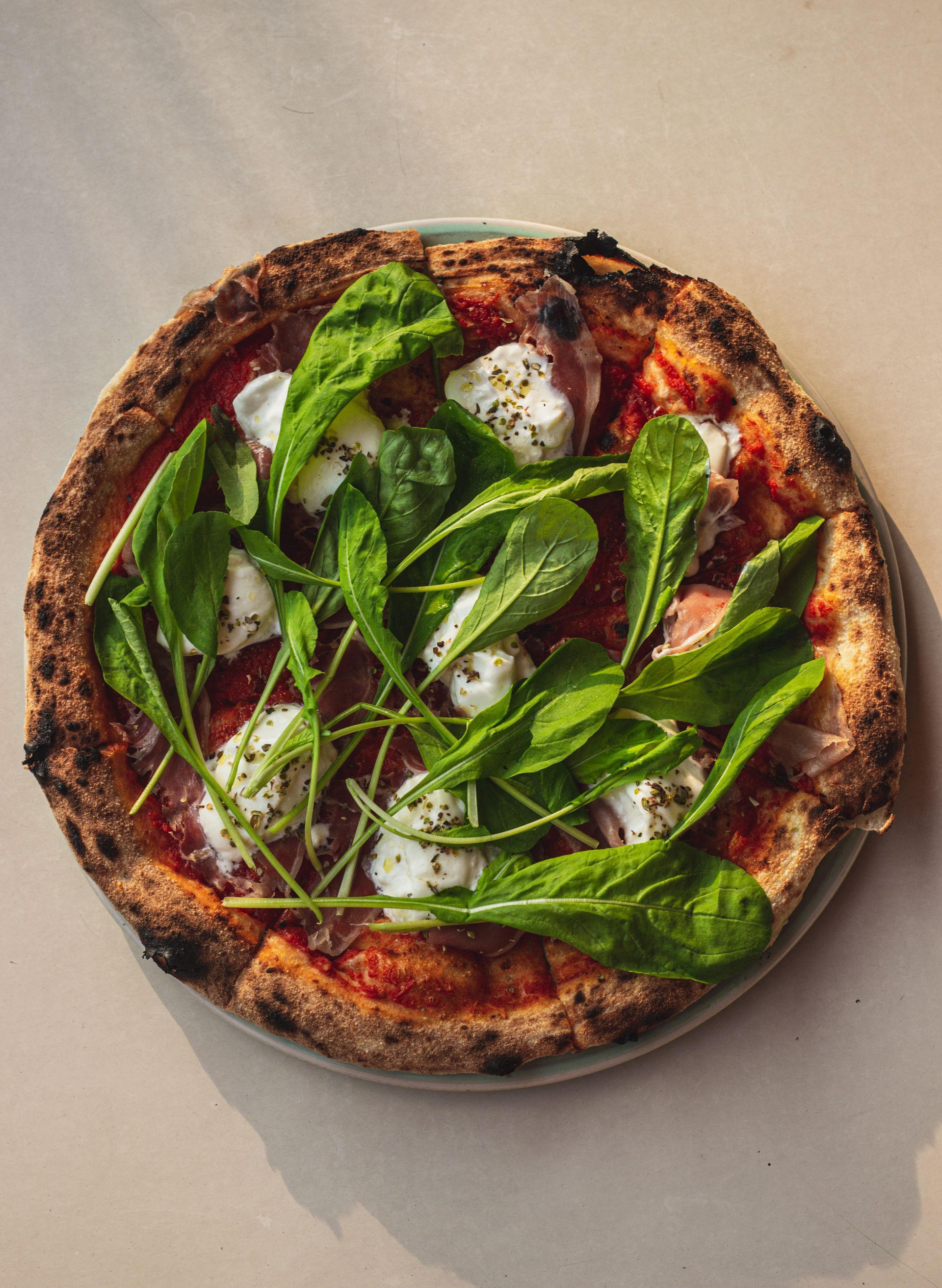
Restaurants in Samui
Find the best restaurants in Koh Samui
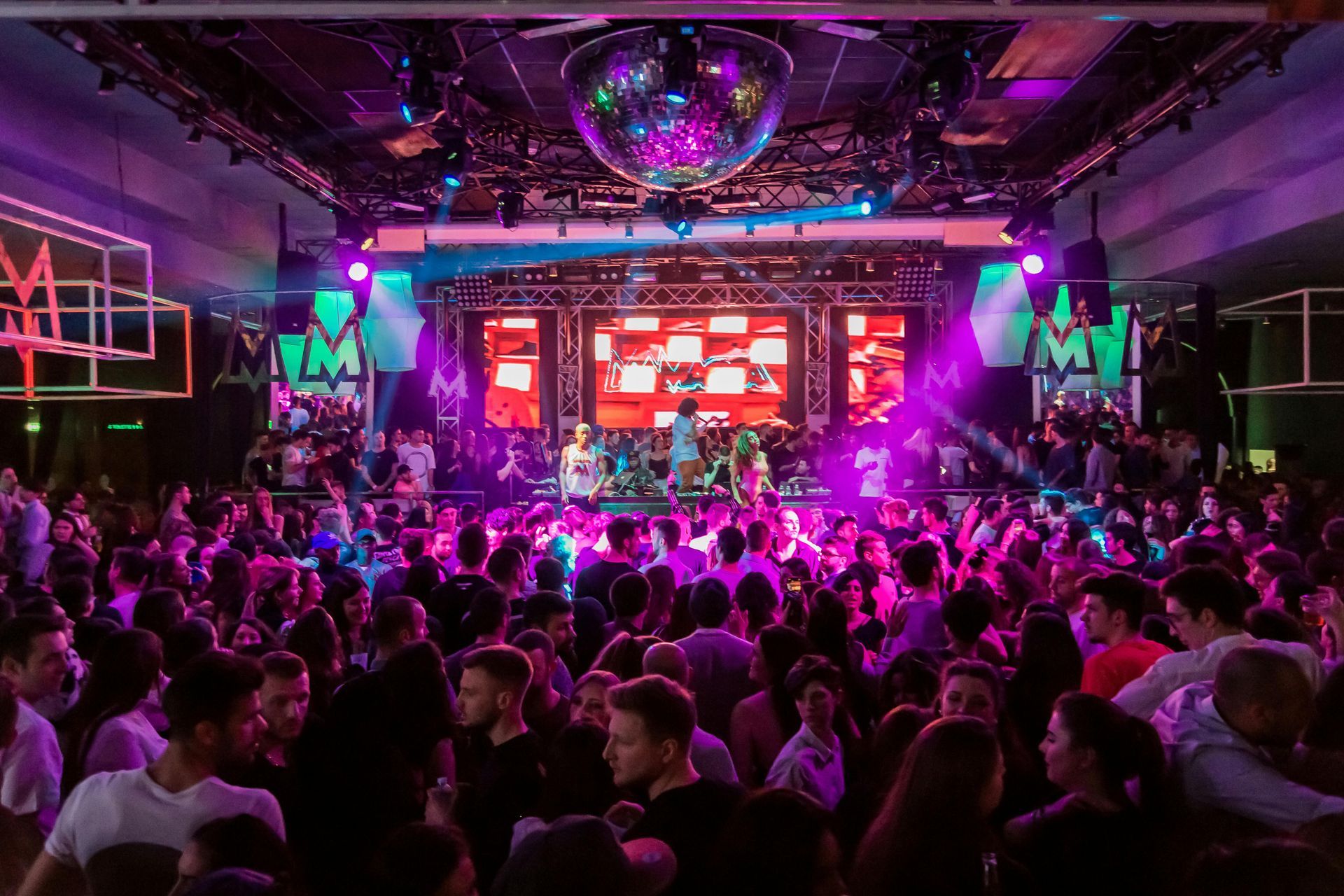
Nightlife in Koh Samui
Discover Koh Samui's vibrant nightlife

Tours in Koh Samui
Discover the best tours in Koh Samui
Car/Motorbike rentals
Find car and motorbike rentals in Koh Samui